Reports & Publications
Loading articles…

The trainability of photonic quantum circuits
Research from ORCA Computing, Imperial College London and the University of Oxford shows that photonic systems stay trainable as they scale, while maintaining a provable edge over classical methods. These are backed up by results from ORCA’s PT-2 photonic quantum accelerator.
Nonlinear photonic architecture for fault-tolerant quantum computing
ORCA's nonlinear photonic architecture lets photons interact directly, removing key failure points of linear-optics approaches. The result is lower resource overheads and far greater tolerance to optical loss (around 12%), a significant step towards scalable, fault-tolerant quantum computing.

Hybrid quantum-classical de novo design of MHC-binding peptides
Together with the Technical University of Denmark, ORCA has demonstrated the first end-to-end hybrid quantum-classical pipeline for designing functional peptides. Samples from an ORCA photonic quantum processor guided a generative AI model and increased the yield of strong binders, especially for understudied immune targets. Lab testing then confirmed that the designs worked, marking a concrete step towards quantum-accelerated vaccines and immunotherapies.

Quantum for Enterprise Data Centers: ORCA Computing’s Accelerator Approach to Current HPC infrastructure and Workloads
Hyperion Research's Chief Analyst for Quantum Computing, Bob Sorensen, discusses how ORCA’s photonic quantum systems bring scalable quantum acceleration directly into standard enterprise data centers to power AI, HPC, and optimisation workloads.

Photonic Quantum-Enhanced Knowledge Distillation
Developed with NVIDIA, Jij, Imperial College London and the University of Oxford, this framework uses a photonic quantum circuit to guide the training of a compact AI model as it learns from a larger one. The result is up to ~100× fewer parameters with competitive accuracy, and the finished model runs entirely on classical hardware.
Towards a Scalable Linear-Cavity Enhanced Warm-Vapour Photonic Quantum Memory
Many of ORCA's key technologies depend on strong interactions between light and rubidium atoms. This paper shows how a simple linear optical cavity can boost that interaction in a room-temperature quantum memory, cutting power requirements and device size by an order of magnitude. The compact design can be scaled into large arrays and points to a route towards single-photon optical nonlinearities.

A Binary Optimisation Algorithm for Near-Term Photonic Quantum Processors
Developed with the Poznan Supercomputing and Networking Center (PCSS), this paper presents an updated version of ORCA's Bosonic Binary Solver, an algorithm for binary optimisation problems such as those found in logistics and scheduling. Samples from a photonic quantum circuit, refined by trainable classical processing, propose progressively better solutions. The algorithm performs competitively against classical baselines in simulation and is demonstrated on an ORCA PT-1 system.
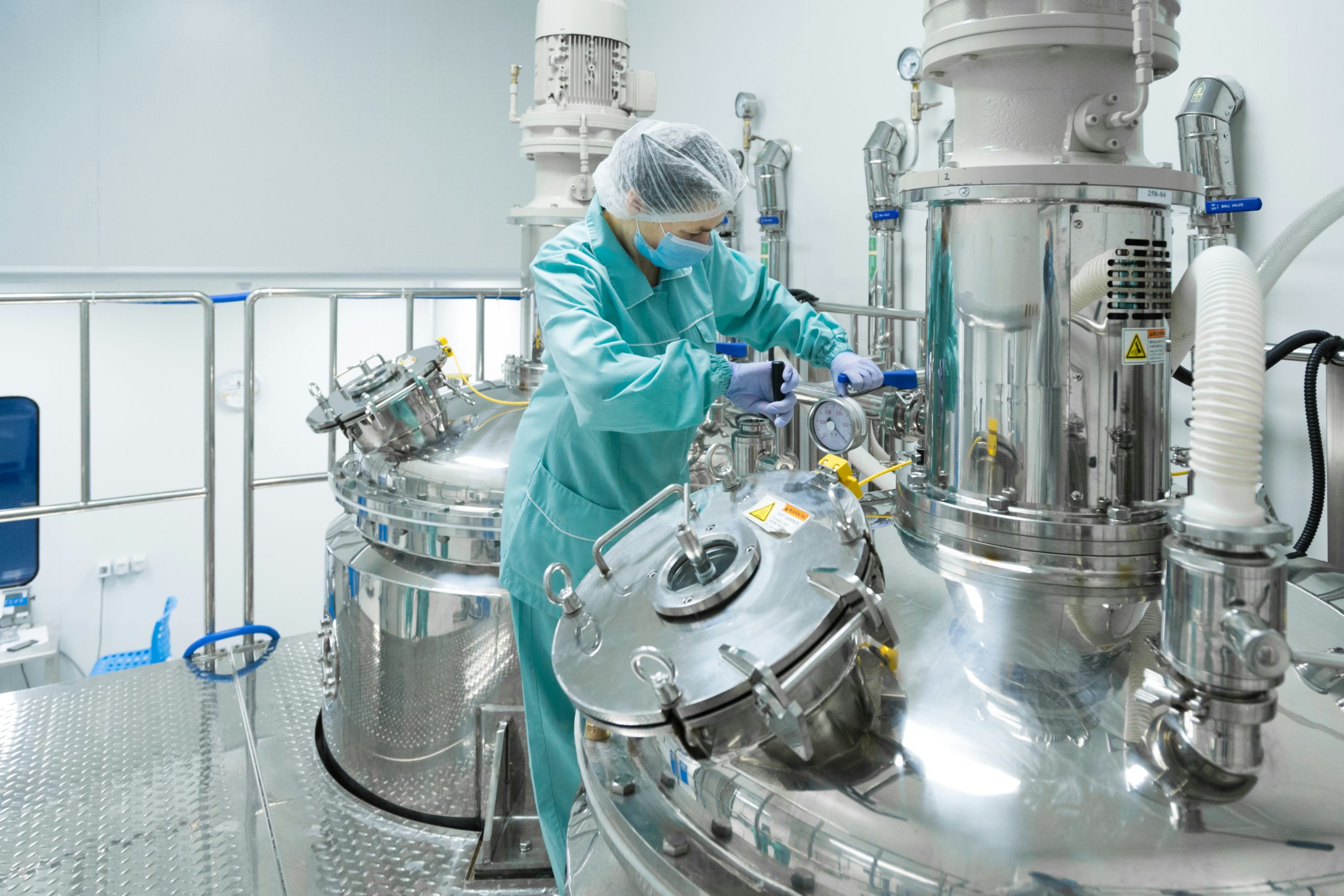
Quantum enhanced ensemble GANs for anomaly detection in continuous biomanufacturing
Developed with Novo Nordisk, SiC Systems and the Technical University of Denmark, this award-winning work applies quantum-enhanced generative AI to anomaly detection in continuous biomanufacturing, where even small deviations can disrupt production. The quantum-enhanced models detected 30% more anomalies than the classical baseline, with gains on both simulated and real ORCA PT-2 hardware.

Quantum Latent Distributions in Deep Generative Models
Generative AI models turn inputs into realistic data, and the choice of that input shapes what they can produce. This paper proves that, under certain conditions, inputs sampled from a quantum processor let these models produce data that classical inputs cannot efficiently generate. We produce 46% more valid and unique molecules than the classical baseline on a chemistry dataset using an ORCA PT-2 processor.
Be first in line for PT-3
Register your interest for the October 2026 launch, or start building on real hardware today with PT Studio.