Open roles
Join us in building the next generation of quantum computing solutions.


I am a Senior Quantum Theory Researcher in ORCA’s Future Systems Team. I develop and optimise our nonlinear architecture and contribute to our long-term roadmap towards scalable, fault-tolerant quantum computing.
At ORCA, everyone is welcoming, open and enthusiastic about our work. My colleagues are very sociable and always open for a chat about their projects, whether it’s over a coffee or a beer after work. I split my time working at home and in the office. This allows me to collaborate with colleagues in London while also enjoying the flexibility of remote work with colleagues in the U.S.
Working for a company that focuses on long-term architecture while developing current systems and bridging the gap between the two is truly amazing. We have an environment where there is always something new to learn and explore. If you have a promising idea, you’ll always find enthusiastic colleagues ready to support and help you develop it.

I’m a Senior Quantum Optics Engineer, working at the intersection of Research and Product Development. I transform lab-demonstrated technologies into current or future products. Day to day, I’m in the office or lab, collaborating with scientists and engineers. No two days are the same. You could find me doing CAD or coding at my desk, or in the lab working with lasers, soldering, building and maybe even prototyping with the 3D printer.
I love the culture at ORCA. It’s driven, energetic, passionate and inclusive.
The talented team I work with is ORCA’s most unique asset. Quantum computing is inherently niche, but ORCA goes further by providing full-stack, quantum-capable hardware to customers. This makes the products I help design, build and deliver, exciting.

I’m a Project Manager based in London. My role involves collaborating with the technical team to develop systems and overseeing multiple UK research projects. I coordinate with engineers and developers to align technical aspects with project goals, submit claims for ongoing projects and manage financial documentation. Monthly reviews are a key part of my routine, where I conduct lessons-learned sessions and update stakeholders on project progress.
ORCA’s culture is all about diving deep into specialised areas of knowledge. I love the diversity and the unique perspectives different backgrounds bring to our team. This environment is perfect for continuous learning and growth, offering lots of opportunities for personal and professional development through mentorship and challenging projects.
Our organisation gives you a unique chance to work at the cutting edge of quantum computing, teaming up with top scientists and researchers. At ORCA, you’ll get hands-on experience with the latest tech and an amazing learning experience that mixes theory with real-world application.
Join us in building the next generation of quantum computing solutions.
At ORCA, we recognise the power of diversity, equity and inclusion in nurturing innovation. Throughout our company, we’re committed to creating a diverse, inclusive and collaborative environment where every voice matters.
We value the unique perspectives, experiences and talents within our team as they not only enrich our community but also drive us towards shaping a more compassionate and dynamic world.
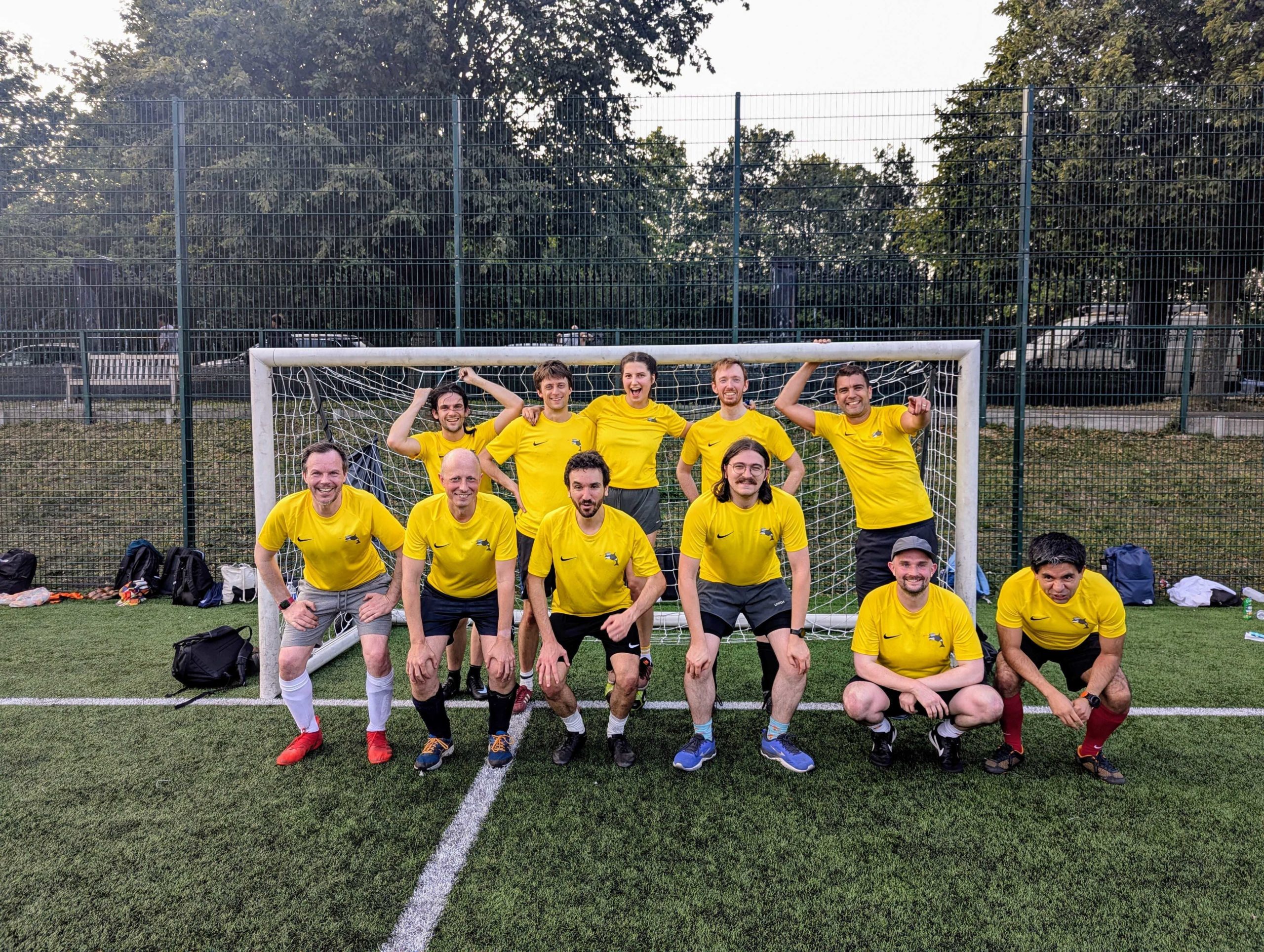
Build the future of computing, with the time, flexibility and support to do your best work and grow your career.
Explore opportunities to be part of our team. Email us with the role you’re interested in and attach your CV.

David Hall DPhil
Head of Delivery
Prof. Ian Walmsley is Chairman of the ORCA Computing Board and a leading figure in quantum optics, quantum memories and waveguide circuits. He is Provost of Imperial College, London, an Honorary Fellow at St Hugh's College, Oxford and a Fellow of the Royal Society, The Optical Society, the Institute of Physics and the American Physical Society. Previously, he was President of the Optical Society of America, Pro-Vice-Chancellor for Research and Innovation, Hooke Professor of Experimental Physics at the University of Oxford and Director of the NQIT (Networked Quantum Information Technologies) hub. Prof. Walmsley is recognised for developing the SPIDER technique for characterising ultra-fast laser pulses.

Enhance renewable energy optimisation and accelerate the development of biofuels.
Investigating molecular structures is an important pursuit in computational chemistry, especially in fields likes biofuel formulation, material innovation, and pharmaceutical development where research acceleration is critical. The specific problem considered here is significant across the energy industry, as molecule’s possible structures directly determine many of its physical and chemical traits. However, the vast array of possible configurations and high computational requirements make it difficult for traditional methods to find low-energy conformations for certain molecules.
ORCA partnered has with bp to explore a hybrid quantum-classical approach using generative adversarial network (GAN) algorithms. This approach aims to generate low-energy conformations of small and medium size hydrocarbon molecules, offering a potential solution to the computational hurdles faced in molecular exploration.